
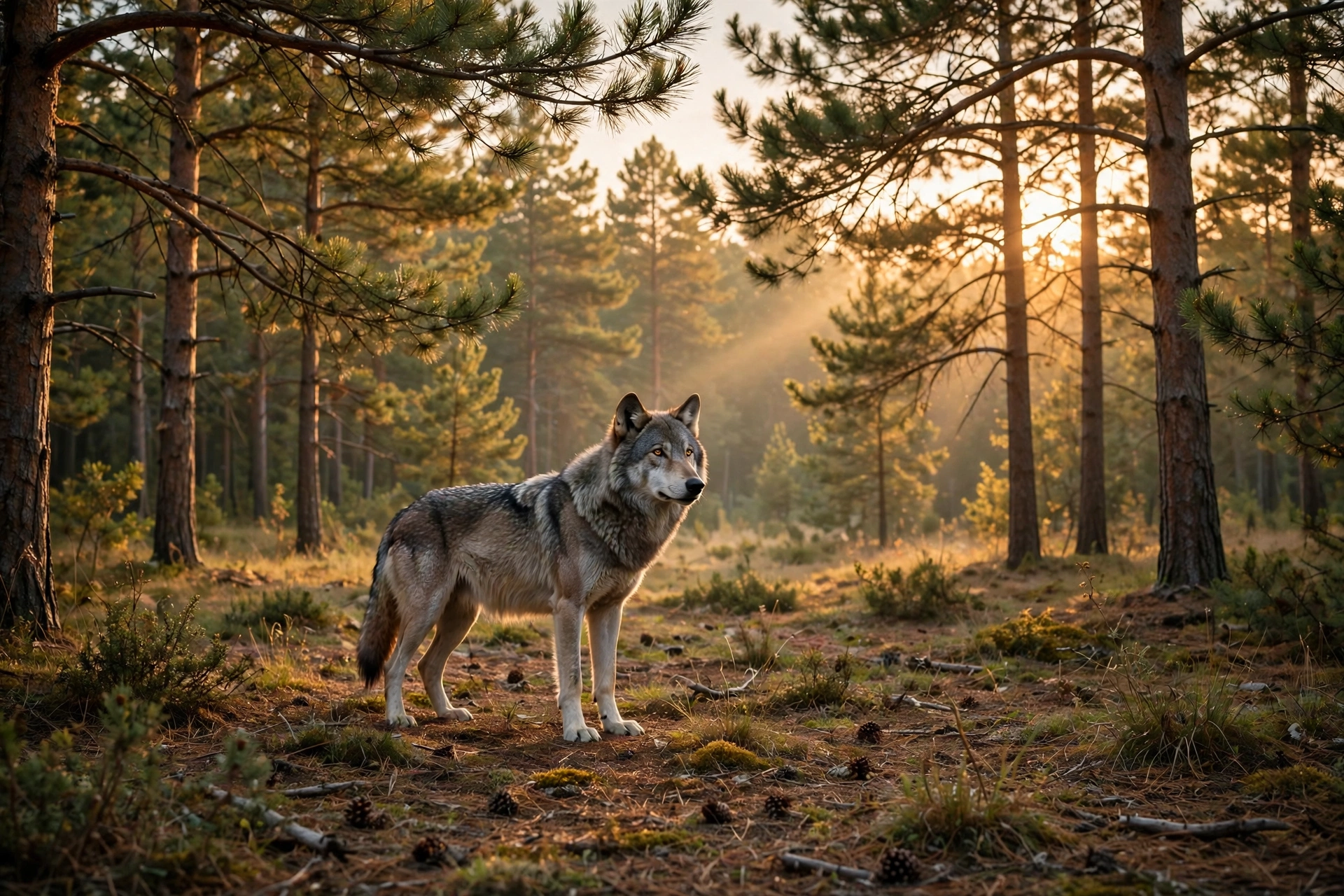
Wolf Spiritual Meaning: Loyalty, Instinct, and Freedom
The wolf spiritual meaning is about loyalty, family, sharp instincts, and freedom. Wolves live in close family groups called packs. They hunt together, raise their young together, and protect each other. For this reason, the wolf has long stood for trust, loyalty, and a strong bond with loved ones.
A wolf can also point to your inner voice. Spiritually, it often reminds you to trust your gut feeling, stand by your people, and still keep your own free and wild side alive.
What Does a Wolf Symbolize?
Wolf symbolism grows out of how wolves really live. A pack is a family, not a random group. Each wolf has a role, and the group survives because the members work as one. These real traits shape the meanings people give to the wolf.
Loyalty and Family Bonds
Wolves mate for long periods and care deeply for their pups. Older young often stay and help raise new pups. Because of this, the wolf is a clear symbol of loyalty, family love, and standing by the people who matter to you.
Trust in Your Instincts
A wolf reads the world through sharp senses. It hears, smells, and senses danger long before it can be seen. As a symbol, the wolf asks you to trust your own inner sense. If a person or a plan feels wrong, that quiet feeling may be worth hearing.
Freedom and a Wild Heart
The wolf cannot be fully tamed. It stands for the part of you that needs open space, honest living, and room to roam. Like the fox spiritual meaning, the wolf honors a wild nature, but the wolf adds a stronger call to protect home and family.
Teamwork and Shared Strength
A lone wolf can hunt small prey, but a pack can do far more. The wolf teaches that real strength often comes from a group that trusts each other. It is a sign to ask for help when you need it and to give help when you can.
What Does It Mean When You See a Wolf?
Most people will not meet a wild wolf up close. A “wolf sighting” may come as a real animal, a photo, a video, or a wolf that keeps showing up in your thoughts. When the wolf appears again and again, many people take it as a message.
Seeing a wolf can mean it is time to check your circle. Are you loyal to the right people? Are they loyal to you? It can also be a call to trust yourself more and to speak with honesty.
A Lone Wolf Crossing Your Path
A single wolf is often read as a sign about independence. It may point to a season where you must walk your own road for a while. This is not always sad. A lone season can help you grow strong and clear about who you are.
Seeing a Pack of Wolves
A pack points to family and teamwork. It can be a gentle push to heal a family bond, join a healthy group, or stop trying to carry every load alone.
The Wolf as a Spirit Animal
People who feel close to the wolf often value loyalty above almost all else. They are watchful, smart, and slow to trust, but once they trust, they stay. The wolf spirit animal is linked with strong intuition and a deep need for both family and freedom.
Where the deer spiritual meaning centers on gentleness and grace, the wolf adds courage, guard duty, and the strength to defend what you love. If the wolf is your spirit animal, you may be called to lead with care, set clear limits, and keep your word.
Wolf Dreams and What They Can Mean
Dreams of wolves often deal with trust, fear, and instinct. The mood of the dream matters most.
A Friendly Wolf in a Dream
A calm or friendly wolf can point to a loyal friend or a growing trust in yourself. It may show that your instincts are sound and that you can rely on your inner guide.
Being Chased by a Wolf
A wolf chase in a dream can reflect a fear you are running from. It may be a hard talk, a duty, or a truth about a relationship. The dream can be a push to turn and face it.
A Howling Wolf in a Dream
A howl is the wolf’s call to its pack. In a dream, it can mean a need to reach out, to be heard, or to answer a call from family or close friends.
What Does a Dead Wolf Mean?
Finding a dead wolf, or seeing one in a dream, can feel heavy. In spiritual terms, it is often read as the end of a loyal bond or the close of a wild, free stage of life. It can also point to a warning: a trust may have been broken, or a group tie may be fading. Like the bear spiritual meaning, which deals with strength and rest, a dead wolf can ask you to pause, grieve what has ended, and guard your energy while you heal.
Wolves in Old Stories and Beliefs
Many Native American traditions respect the wolf as a teacher and a guide. In several tribal teachings, the wolf shows the value of family, loyalty, and learning from the land.
In Roman myth, a she-wolf raised the twin brothers Romulus and Remus, who were said to found Rome. There, the wolf stands for care, survival, and fierce motherly protection.
In Norse myth, the great wolf Fenrir is tied to fate and the end of an age. That darker image shows the wolf’s wild power, a force that cannot be chained forever. Together, these stories show why the wolf holds so many meanings at once: love, family, instinct, and untamed strength.
You can explore more animal guides on the Spiritual Gleams homepage.
FAQs About Wolf Spiritual Meaning
Is seeing a wolf a good sign?
For most people, yes. A wolf is widely read as a good sign of loyalty, strong instincts, and loyal friends or family near you. It can also be a call to trust yourself.
What does a lone wolf symbolize?
A lone wolf stands for independence, self-trust, and walking your own path for a time. It can mark a season of growth on your own, not a life without love.
What does a white wolf mean spiritually?
A white wolf is often linked with purity, wisdom, and a clear spiritual message. White animals are widely seen as sacred signs, so a white wolf can point to truth and inner clarity.
What does a wolf howling mean?
A howl is how wolves call to their pack and mark their home ground. Spiritually, it can mean a call to reach out to loved ones, speak your truth, or answer when family needs you.
Next time the wolf crosses your path, in life or in a dream, take a quiet moment. Ask what your instincts already know. The answer is often closer than you think.




One Comment