Kinkajou Spiritual Meaning: Joy, Sweetness, and Flexibility
The kinkajou spiritual meaning is about joy, sweetness, and flexibility. The kinkajou is a small rainforest mammal of Central and South America, kin to the raccoon. It lives in the trees and comes out at night. It has a gripping tail, soft golden fur, and a long tongue made for reaching deep into flowers. People nicknamed it the honey bear for its love of honey. For this reason, the kinkajou has long stood for a sweet outlook, a playful heart, and bending with life instead of breaking.
Spiritually, the kinkajou often points to the good things hidden in dark times. It reminds you that even the night hours hold sweetness, if you know how to reach for it.
The Honey Bear of the Night Forest
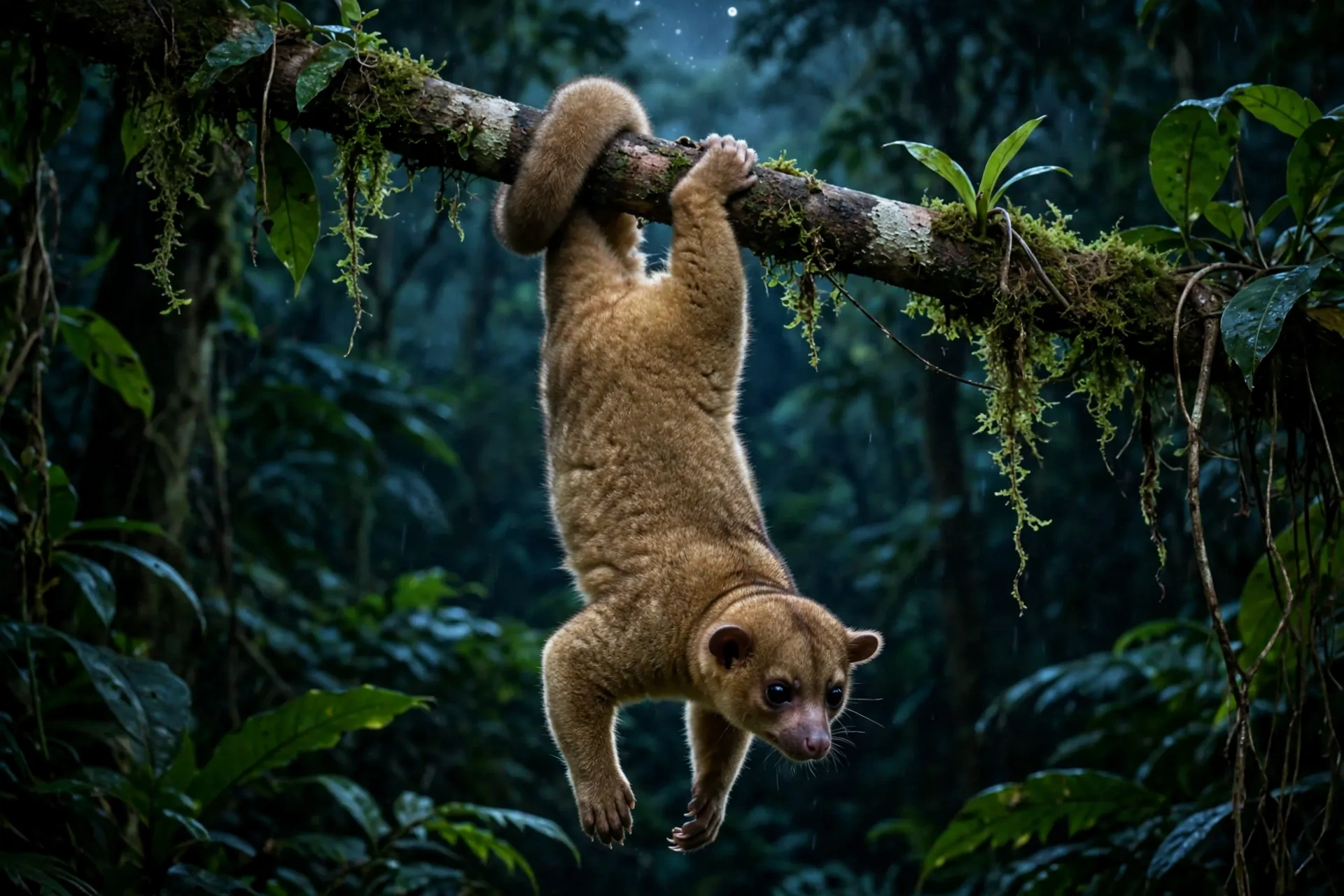
The kinkajou spends its life in the high branches of the rainforest. Its tail grips like a hand, holding it safe as it reaches for fruit at the tips of thin limbs. Its tongue can stretch far out of its mouth, perfect for licking nectar from flowers and honey from hives. Fruit makes up most of its meals.
One of its strangest gifts is in its feet. A kinkajou can turn its back feet all the way around. This lets it run and climb both ways along a branch, forward or backward, with the same ease. By day it sleeps in the hollow of a tree. By night it wakes, climbs, feeds, and plays in the dark canopy, safe from most hunters.
What Does a Kinkajou Symbolize?
Kinkajou symbolism grows out of how kinkajous really live. A kinkajou survives by being flexible, gentle, and active in the night, feeding on the sweet gifts of the forest. These real traits shape the meanings people give to the kinkajou.
Seeking the Sweetness in Life
Honey, nectar, ripe fruit: the kinkajou spends its nights finding the sweetest foods in the forest. As a symbol, it stands for a hopeful outlook. It asks you to look for the good in each season, even when life feels dark.
Flexibility in Body and Mind
Feet that turn both ways let the kinkajou change direction in a blink. As a symbol, this points to flexibility. When a plan fails, the kinkajou does not freeze. It turns, adjusts, and keeps moving along the branch.
Joy That Comes Out at Night
The kinkajou wakes when the forest sleeps, and it fills the dark hours with feeding and play. As a symbol, it honors joy in unlikely times. Like the echidna spiritual meaning, which honors another quiet night wanderer with a long, busy tongue, the kinkajou shows that the night shift of life can be rich and full.
Small Acts That Help Others Bloom
As the kinkajou drinks nectar, pollen dusts its face and fur. It carries that pollen from flower to flower, helping the forest bloom. As a symbol, this points to gentle impact: the good you spread without trying, just by living your life with care.
What Does It Mean When You See a Kinkajou?
Most people meet a kinkajou in the rainforests of Central or South America, at a zoo, or in films of the night forest. When the kinkajou keeps showing up for you, many people take it as a message about joy and flexibility.
Seeing a kinkajou can mean it is time to loosen up and enjoy the sweet parts of life again. It can also be a sign to change direction with grace when a path closes. You can explore more symbolism meanings of rainforest animals in the guides on this site.
A Kinkajou Hanging by Its Tail
A kinkajou hanging from a branch points to trust and play. It may be a sign that you are safer than you feel, and that you can afford to enjoy the moment.
A Kinkajou Reaching for Flowers
A kinkajou stretching toward a flower points to a sweet goal just out of reach. It can be a sign to stretch a little more. The good thing you want may be closer than it looks.
The Kinkajou as a Spirit Animal
People who feel close to the kinkajou are often warm, playful, and easy-going. They adapt fast and hold no grudges. They find fun in small things and sweetness in plain days. The kinkajou spirit animal is linked with joy, flexibility, and a gentle heart.
Where the deer spiritual meaning centers on gentleness and grace, the kinkajou adds a playful spark: grace that swings through the night trees with a smile. If the kinkajou is your spirit animal, you may be called to stay flexible, spread quiet good wherever you go, and never lose your taste for the sweet moments of life.
Kinkajou Dreams and What They Can Mean
Dreams of kinkajous often deal with joy, rest, and changing direction. The mood of the dream matters most.
A Kinkajou Eating Fruit in a Dream
A kinkajou enjoying fruit can point to simple pleasure. It may show that a sweet season is here, and you are allowed to enjoy it without guilt.
A Kinkajou Swinging Through Trees
A swinging kinkajou can mean you are handling change with ease. It may be a sign that your flexible side is guiding you well through a shifting time.
A Kinkajou Sleeping in a Tree Hollow
A sleeping kinkajou points to deep, safe rest. It may show that you need a hidden, quiet place to recharge before your next busy night.
What Does a Dead Kinkajou Mean?
Finding a dead kinkajou, or seeing one in a dream, can feel like a small light has gone out in the night forest. In spiritual terms, it is often read as joy that has faded, or a playful spirit worn down by stress. It can also point to sweetness in life that was never tasted. Like the wallaby spiritual meaning, which centers on gentle care and close family ties, a dead kinkajou can ask you to slow down, hold your loved ones close, and let your soft side heal.
FAQs About Kinkajou Spiritual Meaning
Is seeing a kinkajou a good sign?
For most people, yes. A kinkajou is widely read as a good sign of joy, sweetness, and easy change. It can also be a call to enjoy the good parts of life more fully.
Why is the kinkajou called a honey bear?
The name comes from its love of honey. A kinkajou will raid a hive and use its long tongue to lick honey from deep inside. It is not a bear at all, but a kin of the raccoon.
What does a kinkajou mean as a spirit animal?
As a spirit animal, the kinkajou points to joy, flexibility, and gentle impact. It suits people who adapt with ease, stay warm and playful, and spread good without trying.
What does it mean to dream of a kinkajou?
A kinkajou dream often deals with pleasure and change. Eating fruit can mean a sweet season is here. Swinging through trees may point to handling change with ease.
Next time the kinkajou swings into your thoughts, let it lift your mood. Stay flexible, reach for the sweet things, and remember that even the dark hours can be full of life.