Linnet Spiritual Meaning: Sweet Song, Love, and Simple Joy
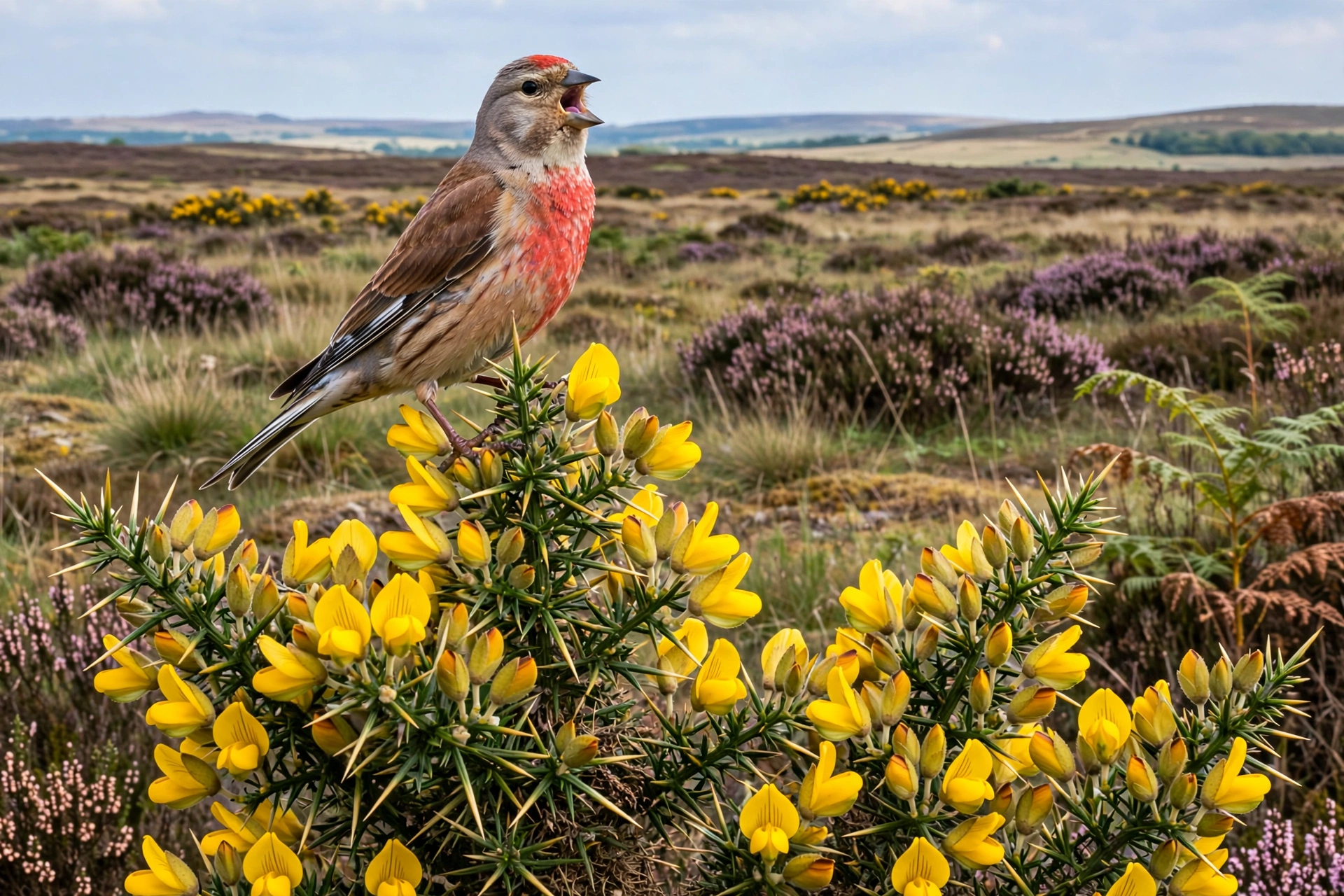
The linnet spiritual meaning is about sweet song, gentle love, and joy in small, plain things. The linnet in this guide is the common linnet, a small finch of Europe. In spring the male wears a rosy red breast and forehead, and his soft, twittering song drifts over gorse bushes and open heath. For this reason, the linnet has long stood for a glad heart, faithful love, and beauty that does not need to shout.
Spiritually, the linnet points to the quiet gifts in your own life. It reminds you that a small voice, used with love, can sweeten a whole place.
A Small Finch With a Rosy Breast
The linnet is a slim, streaky brown finch for most of the year. In the breeding season, the male changes: his forehead and breast turn a warm rosy red, and his head goes soft grey. The female stays plain brown, which hides her well on the nest.
Linnets eat seeds above all else. Their name comes from linseed, the seed of the flax plant, a favorite food. They feed on the ground and in low bushes, often in small, busy groups. In winter they gather in larger flocks over fields and coasts.
The male’s song is a fast, musical twitter, full of soft notes mixed together. He sings from the top of a gorse bush or in a short song flight above it. People once prized linnets as cage birds for this song, though the wild bird sings best when it is free.
What Does It Mean When You See a Linnet?
Linnets are birds of open country: heaths, farmland edges, and coastal scrub. When the linnet keeps showing up for you, many people take it as a message about love, song, and simple joys.
Seeing a linnet can mean a plain season of life holds more sweetness than you thought. It can also be a sign to use your own voice — to sing, speak, or write the thing you have kept quiet. A pair of linnets together can point to a bond that is warming, like the male’s breast turning red with the spring.
A Linnet Singing From a Gorse Bush
A singing male points to joy shared out loud. It may be a sign that your small gift, offered freely, will reach further than you expect.
What Does a Linnet Symbolize?
Linnet symbolism grows out of how linnets really live: a plain bird with a hidden flush of red, a sweet song, and a life spent close to the ground among seeds and low bushes.
Joy in Small Things
The linnet is not rare or grand, yet its song is one of the sweetest of the hedgerows. As a symbol, this points to joy in plain days. On Spiritual Gleams, the linnet is read as a sign that a common life, sung well, is a rich one.
Love That Warms Slowly
The male’s red breast comes with the spring, growing bright as the days lengthen. As a symbol, this points to love that warms and deepens in its season. It honors bonds that ripen slowly and show their true color in time.
A Voice Meant to Be Free
A linnet in a cage still sings, but the wild bird’s song belongs to the open heath. As a symbol, this points to gifts that need freedom. Like the mallard spiritual meaning, which is tied to ease and trust on open water, the linnet points to a spirit that does its best work unpenned and unforced.
The Linnet as a Spirit Animal
People who feel close to the linnet are often gentle, warm, and easy to love. They bring sweetness into plain rooms. They are faithful to their close people and content with simple pleasures: a song, a shared meal, a walk in open air. The linnet spirit animal is linked with joy, love, freedom, and a glad voice.
Where the owl spiritual meaning centers on wisdom in quiet and dark, the linnet adds wisdom in soft daylight: sing what you feel, love without show, and let small joys count. If the linnet is your spirit animal, you may be called to free your voice and trust that it is enough.
Linnet Dreams and What They Can Mean
Dreams of linnets often deal with song, love, and freedom. The mood of the dream matters most.
A Linnet Singing in a Dream
A singing linnet can point to good news or a gift ready to be shared. It may show that your voice — in work, in love, or in art — is about to be heard kindly.
A Linnet in a Cage
A caged linnet can stand for a gift or a love that feels trapped. The dream may ask what fence, fear, or habit is keeping your song small.
A Pair of Linnets
Two linnets close together can point to a bond warming into its season. It may be a gentle sign to tend a love with patience and let it redden in its own time.
What Does a Dead Linnet Mean?
Finding a dead linnet, or seeing one in a dream, can feel like a small song has stopped in the hedge. In spiritual terms, it is often read as joy squeezed out by a hard season, or a sweet gift left unused. Like the moorhen spiritual meaning, which honors quiet care among the reeds, a dead linnet can ask you to protect the soft things in your life: rest your voice, guard your gladness, and give your loves time and air before they fade.
FAQs About Linnet Spiritual Meaning
Is seeing a linnet a good sign?
For most people, yes. A linnet is widely read as a good sign of joy, gentle love, and sweetness in plain days. It can also be a call to use your voice and share your gifts.
Why is the linnet named after flax?
Its name comes from linseed, the seed of the flax plant. Linnets love seeds, and flax seed was a well-known part of their diet, so the bird took the plant’s name.
What does a linnet mean as a spirit animal?
As a spirit animal, the linnet points to joy, faithful love, freedom, and a sweet voice. It suits gentle people who bring warmth to plain places and sing their own song.
What does it mean to dream of a linnet?
A linnet dream often deals with song and love. A singing bird can mean a gift is ready to share. A caged bird can mean a talent or a bond needs more freedom.
Next time the linnet comes to mind, picture the small finch on a gorse bush in spring sun, breast glowing rose-red, pouring out its soft twitter over the heath. Your life does not need to be grand to be sweet. Sing your small song, love in season, and let plain days glow.