Tsetse Fly Spiritual Meaning: Deep Rest, Small Threats, and Guarded Land
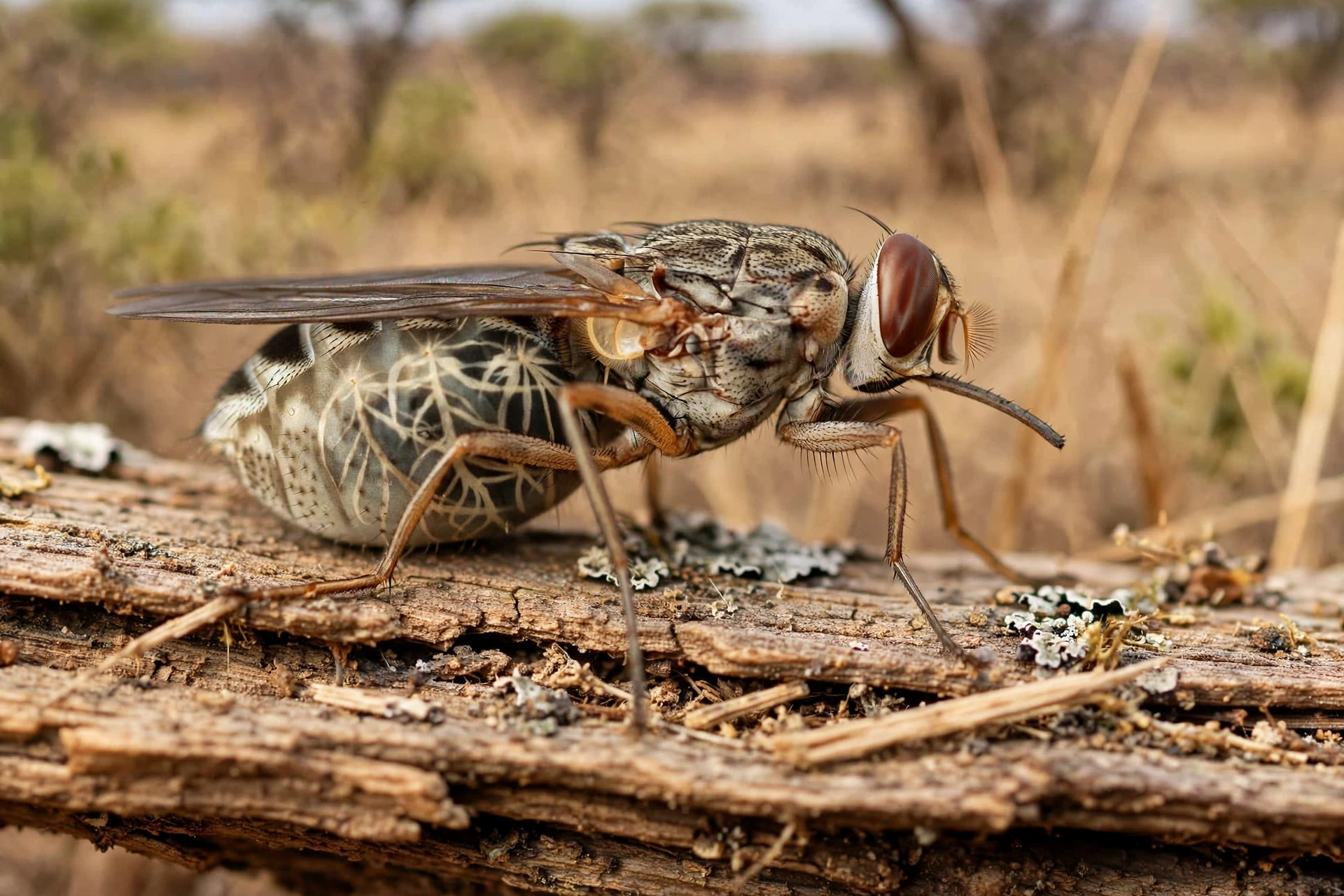
The tsetse fly spiritual meaning is about deep rest, small threats with wide effects, and land that guards itself. The tsetse is a sturdy biting fly of Africa. Both the males and the females feed on blood, and its bite can carry sleeping sickness to people and a sister illness, called nagana, to cattle. At rest, it folds its wings flat over its back, one over the other, like a pair of scissors. For this reason, the tsetse has long stood for the thin line between rest and risk — and for how much weight one small creature can carry.
Spiritually, the tsetse fly often points to the place where tiredness and danger meet. It asks a sober question: where in your life has rest become hard, and what small thing is keeping it that way?
The Fly That Folds Its Wings Like Scissors
Tsetse flies live in the warm woodlands, river edges, and bush country of Africa, south of the great desert. They are plain brown or grey flies, a little larger than a housefly, with a stiff feeding tube that points forward from the head.
Both sexes drink blood — from wild animals, from cattle, and at times from people. Most tsetse carry nothing harmful. But some carry the tiny parasite that causes sleeping sickness, and a bite from one of those can pass it on. The illness is serious, yet doctors can treat it, and treatment works best when it starts early.
The fly has also shaped the land itself. Where tsetse thrive, herders could not keep cattle, so wide stretches of bush stayed wild and full of game. One small fly, feared for generations, quietly kept whole landscapes unchanged. At rest, the tsetse is easy to know: it lays its wings flat over its back, crossed like scissor blades — a calm, tidy pose for a fly with such a heavy name.
What Does a Tsetse Fly Symbolize?
Tsetse fly symbolism grows out of how this fly really lives: blood-feeding, far-carrying, and bound to the wild land it has guarded for ages.
Rest Is Sacred Ground
Sleeping sickness takes its name from the way it breaks a person’s sleep, turning rest into confusion. As a symbol, this points to the worth of rest itself — sleep is not a luxury, but ground your whole life stands on. You can explore more spiritual meanings of creatures tied to sleep and stillness in the guides on this site.
Small Threats, Wide Effects
One fly is a speck. Yet this speck changed where people could farm, herd, and settle across a continent. As a symbol, this points to small causes with vast results — one habit, one word, one overlooked risk. Unlike the booklouse spiritual meaning, which is all about a tiny insect that harms nothing at all, the tsetse teaches the other side of smallness: size is no measure of impact.
Land That Guards Itself
Where the tsetse ruled, the plough and the herd stayed away, and the wild bush endured. As a symbol, this points to boundaries that protect — the thorn fence, the closed gate, the part of your life that stays wild because something small and fierce stands guard over it.
What Does It Mean When You See a Tsetse Fly?
Most people meet the tsetse on safari, in bush country, or around cattle in the warm parts of Africa. When tsetse flies keep showing up for you, many people take it as a message about rest, risk, and respect for wild places.
Seeing one can mean your rest needs guarding — sleep, quiet, and recovery treated as serious work. It can also be a sign to take one small risk seriously before it grows, the way one bite, out of thousands, can matter.
A Tsetse Fly in the Bush
One met in wild country points to respect for land that is not yours to tame. It may be a sign to move gently through places — and people — that have their own old defenses.
A Tsetse Fly Near Cattle
One around herds points to the cost of care: those who keep animals carry the duty of watching small threats closely. It can be a sign to check the health of what depends on you.
The Tsetse Fly as a Spirit Animal
People who feel close to the tsetse fly are often quiet, self-contained, and stronger than they look. They guard their rest and their ground without making a show of it. The tsetse fly spirit animal is linked with boundaries, deep rest, patience, and quiet impact.
Where the dragonfly spiritual meaning centers on bright, open change above the water, the tsetse adds the lesson of the shaded bush: fold your wings, rest flat and still, and let your small presence carry real weight. If the tsetse is your spirit animal, you may be called to protect your sleep and your wild ground alike.
Tsetse Fly Dreams and What They Can Mean
Dreams of tsetse flies often deal with broken rest, small risks, and tiredness that has a cause. The state of your sleep in the dream matters most.
A Fly That Wakes You in a Dream
A biting fly that will not let you sleep can point to one small worry that keeps breaking your rest. The dream may ask you to find it and settle it, so the night can be yours again.
Falling Into Deep Sleep in a Dream
Unnatural, heavy sleep can stand for escape — a wish to switch off a hard season. It may be a kind sign to seek real rest and real help, rather than hiding inside tiredness.
A Fly With Folded Wings in a Dream
One resting still, wings crossed flat, can point to a threat that is quiet for now — or to your own need to fold down, be still, and recover. The dream may bless plain, guarded rest.
What Does a Dead Tsetse Fly Mean?
Finding a dead tsetse fly — a stiff brown speck with its wings still folded flat — is often read as a risk retired, or a long season of broken rest coming to its end. Like the owlfly spiritual meaning, which honors another strong-eyed insect of warm lands, a dead tsetse can remind you that even feared creatures live small, brief lives. The guard has stood down. Sleep in peace.
FAQs About Tsetse Fly Spiritual Meaning
Are tsetse flies dangerous?
They can be, but the picture is calm and clear: most tsetse carry no illness at all. A few carry the parasite behind sleeping sickness, which is serious but treatable, especially when caught early.
Why is it called sleeping sickness?
The illness slowly breaks a person’s sleep pattern, causing sleep in the day and wakefulness at night, along with deep tiredness and confusion. That broken sleep gave the sickness its name.
What does a tsetse fly mean as a spirit animal?
As a spirit animal, the tsetse fly points to guarded rest, firm boundaries, and quiet impact. It suits people who are small in show but strong in effect.
What does it mean to dream of a tsetse fly?
A tsetse fly dream often deals with rest. A biting fly can mean one small worry is breaking your sleep. A resting fly can mean it is time to fold down and recover.
Next time you see a plain brown fly resting with its wings crossed flat, remember what it carries: a whole history of sleep, risk, and guarded land, folded into one small body. Guard your own rest the same way — quietly, seriously, and without apology.