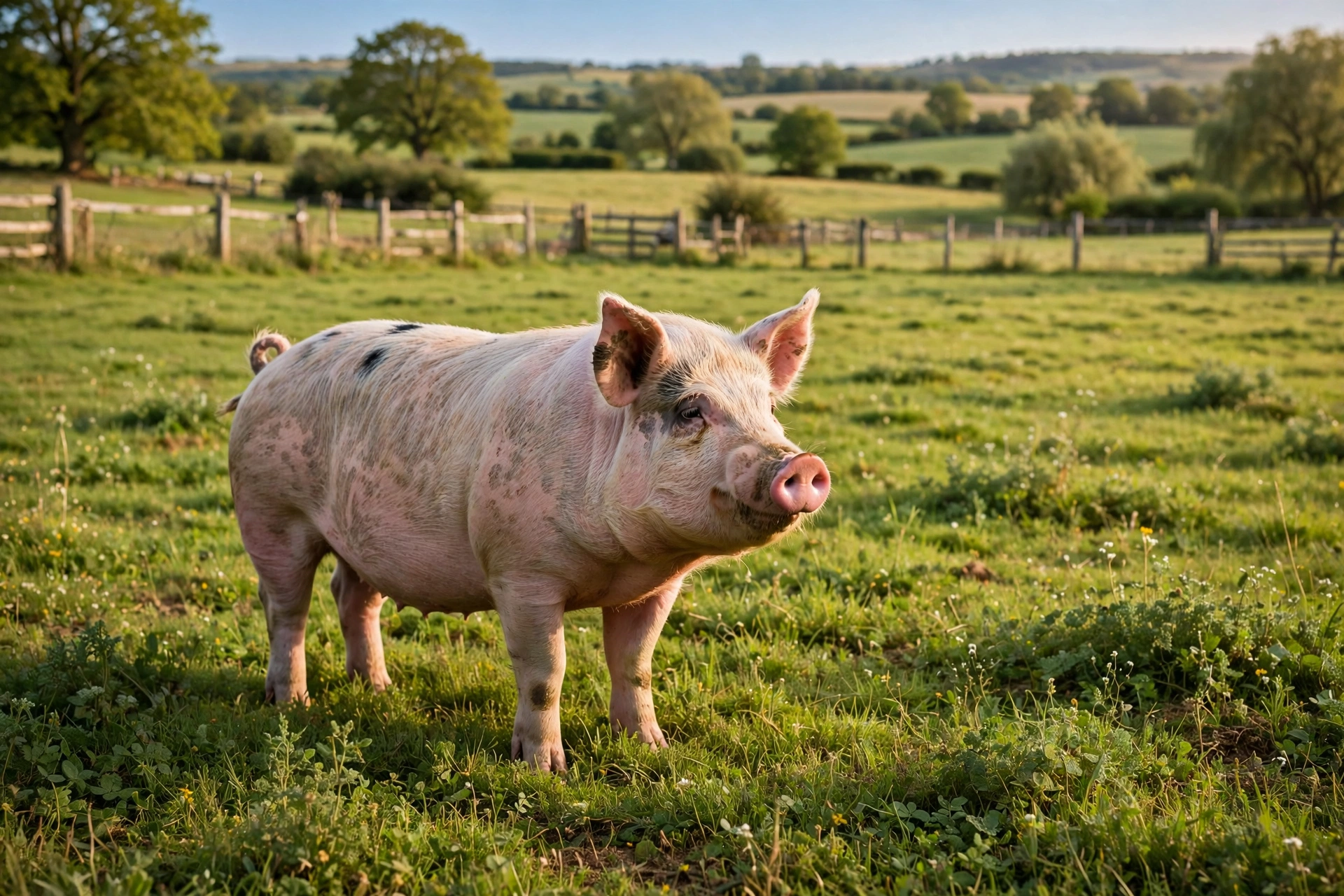
Pig Spiritual Meaning: Intelligence, Abundance, and Good Luck
The pig spiritual meaning is about intelligence, abundance, and enjoying the good things of the earth. The pig is far smarter than its muddy image suggests. Pigs learn fast, recall places and people, and find food with one of the best noses in the animal world.
Spiritually, the pig reminds you that earthly joys are not shameful. It points to good fortune, an honest appetite for life, and using your sharp mind to build a full and generous table.
What Does a Pig Symbolize?
Pig symbolism grows out of how this bright, sturdy animal really lives. A pig explores the world through its snout, rooting in the soil for food. It is social, playful, and much cleaner than its name suggests, given the choice. These real traits shape the meanings people give to the pig.
Intelligence and a Sharp Mind
Pigs are often ranked among the most intelligent of all farm animals. They solve puzzles, learn their names, and can even learn to play simple games. As a symbol, the pig teaches respect for a quick, practical mind. It asks you to trust your smarts, not just your strength.
Abundance and Good Fortune
A well-fed pig has long been a sign of a full farm and a safe winter. In many lands, the pig stands for wealth and plenty. This is why pig-shaped banks became a classic way to save coins. Spiritually, the pig points to abundance that grows from care, saving, and steady work through the seasons.
Enjoying the Earth
Pigs roll in mud for a plain reason: they sweat very little, and mud cools their skin and guards it from the sun and biting bugs. It is wisdom, not filth. As a symbol, this points to honest enjoyment of the senses — good food, rest, touch, and the simple gifts of the earth, taken without shame.
The Pig in Culture and Belief
In the Chinese zodiac, the Pig is the last of the twelve signs, and it is a lucky one. People born in the Year of the Pig are said to be honest, kind, and blessed with good fortune. The pig there stands for wealth, ease, and a generous heart.
Beliefs differ, though. In the Jewish and Muslim faiths, pork is not eaten, and the pig is regarded as unclean. This contrast is a reminder that animal symbols shift with culture: the same animal can mean plenty in one land and a warning in another.
You can read more animal guides at Spiritual Gleams, where each symbol is explored with care.
What Does It Mean When You See a Pig?
A pig sighting may come on a farm, at a fair, or in an image that keeps turning up. When the pig shows up again and again, many people read it as a sign about luck, money, and appetite for life.
Seeing a pig can mean a season of plenty is near, or that you should tend your savings with more care. It can also be a call to enjoy what you already have. Like the cow spiritual meaning, which is tied to nourishment and calm giving, the pig blesses the simple goods of home and table.
A Pig Rooting in the Ground
A pig digging with its snout points to searching for hidden value. It can be a sign to dig a little deeper — in your work, your soil, or your own past — because something good is buried there.
A Happy Pig in the Mud
A pig at ease in the mud is often read as a sign to relax and enjoy yourself. It points to rest without guilt and joy taken in a plain, earthy way.
The Pig as a Spirit Animal
People who feel close to the pig are often smart, warm, and generous. They work hard, save well, and love a full table shared with friends. The pig spirit animal is linked with abundance, honesty, and a sharp, practical mind.
Where the deer spiritual meaning centers on gentleness and grace, the pig adds earthy joy and good sense about money and food. If the pig is your spirit animal, you may be called to build real security, share your plenty, and stop feeling guilty for enjoying the life you have built.
Pig Dreams and What They Can Mean
Dreams of pigs often deal with money, appetite, and self-worth. The mood of the dream matters most.
Dreaming of a Happy, Healthy Pig
A content pig can point to coming plenty and a life in balance. It may show that your work and saving are about to bear fruit, or that you are at peace with your needs.
Dreaming of a Dirty or Chasing Pig
A pig that chases you, or one stuck in filth, can reflect a habit that has grown out of balance — spending, eating, or a mess you keep avoiding. The dream may be a kind push to clean one corner of your life.
Dreaming of Piglets
Piglets point to small new gains and young joys. A litter in a dream can mean several small chances are being born at once, each one needing food, time, and care to grow.
What Does a Dead Pig Mean?
Finding a dead pig, or seeing one in a dream, can feel like a loss at the table. In spiritual terms, it is often read as a season of plenty that has ended, or a warning about waste. It can point to savings drained too fast, or joy that has been squeezed out of daily life.
Like the donkey spiritual meaning, which deals with humble work and patience, a dead pig can ask you to return to basics: work steady, spend wise, and let simple joys rebuild your store, one coin and one meal at a time.
FAQs About Pig Spiritual Meaning
Is seeing a pig a good sign?
For most people, yes. A pig is widely read as a good sign of luck, abundance, and sharp thinking. In some faiths the pig is seen in a different light, so the sign can depend on your own beliefs.
What does a pig tattoo mean?
A pig tattoo often stands for good fortune, abundance, and a love of life’s pleasures. Sailors of old sometimes tattooed a pig on the foot as a charm for safety at sea.
What does a pig mean in the Chinese zodiac?
The Pig is the twelfth sign of the Chinese zodiac. It stands for honesty, wealth, and good luck. People born in a Pig year are said to be kind, loyal, and fond of comfort.
What does a baby pig mean spiritually?
A baby pig, a piglet, points to small beginnings of wealth or joy. It can be a sign that a young plan needs steady feeding before it grows into real abundance.
Next time the pig crosses your path, check your store and your heart at the same time. Save a little, share a little, and enjoy a little. That balance is the pig’s oldest lesson.