Saiga Spiritual Meaning: Endurance, Survival, and New Beginnings
The saiga spiritual meaning is about endurance, survival, and moving with the seasons of life. The saiga is a small antelope of the Central Asian steppe, famous for its large, swollen, trunk-like nose. It travels in herds across open grassland, through dust, heat, and bitter cold. For this reason, the saiga has long stood for pushing through hard times and coming back from the edge of loss.
Spiritually, the saiga often points to your power to adapt. It reminds you that you can breathe through a hard season, change course when the land changes, and still find your way home.
The Antelope With the Unusual Nose
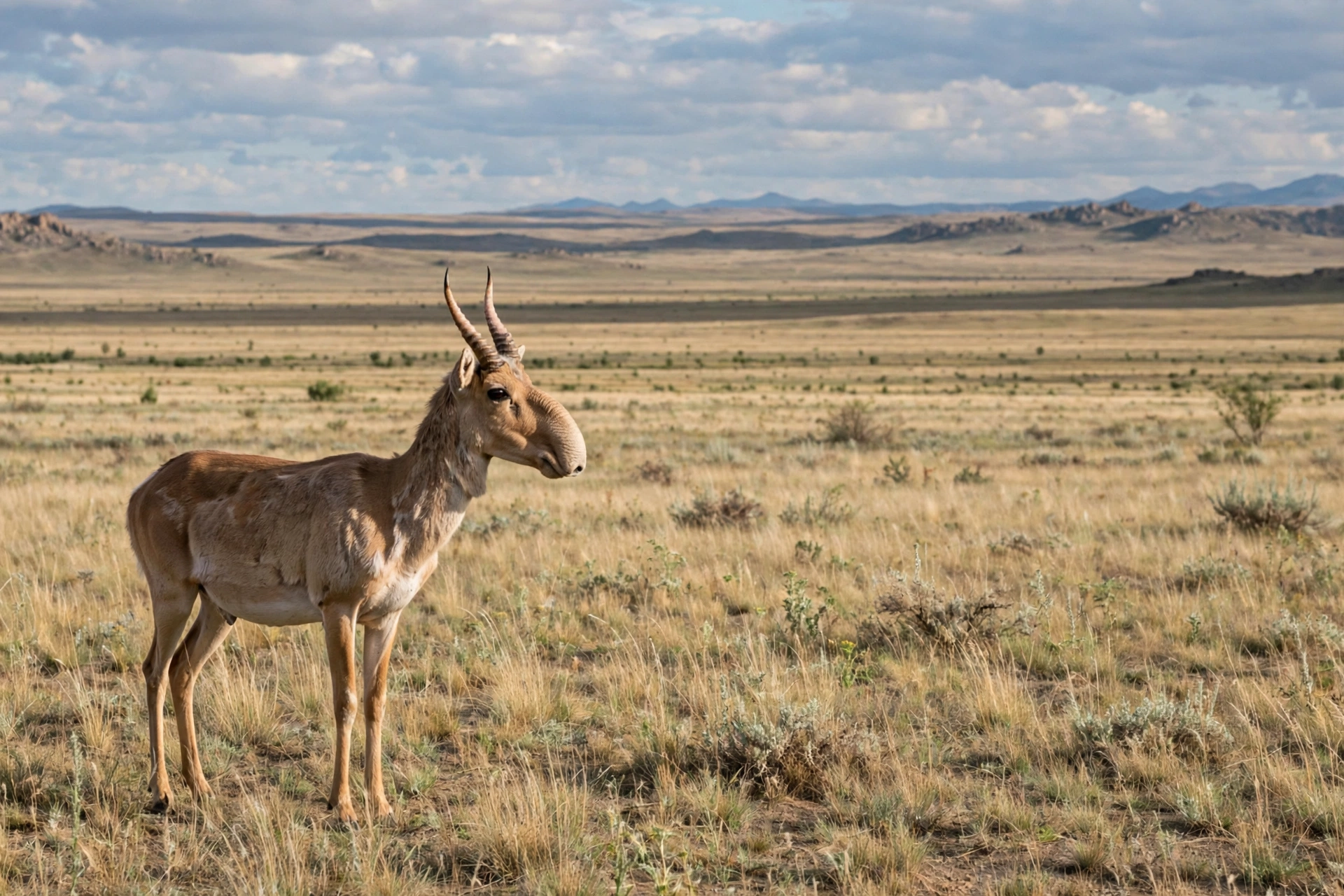
No other antelope looks like the saiga. Its nose hangs down like a short trunk, and it does real work. In summer, the nose filters out the dust kicked up by the moving herd. In winter, it warms the freezing air before the air reaches the lungs.
Saigas wear a pale, sandy coat. Only the males grow horns, which are light amber in color and ringed along their length. The herds travel long distances across the steppe of Kazakhstan and nearby lands, following the grass as the seasons turn.
The saiga has had a hard history. Its numbers fell so low that it became critically endangered. Then strong protection came, above all in Kazakhstan, and the herds slowly began to grow again. The saiga is a living sign that recovery is possible.
What Does a Saiga Symbolize?
Saiga symbolism grows out of how saigas really live. A saiga survives dust, cold, and long journeys across a tough, open land. These real traits shape the meanings people give to the saiga.
Breathing Through Hard Seasons
The saiga’s nose turns harsh air into breath it can use. As a symbol, this points to endurance with skill. You do not have to love a hard season. You only have to find a way to breathe through it. Like the nilgai spiritual meaning, which is about calm alertness on open grassland, the saiga shows how a plain, quiet animal can be built for survival.
Moving With the Seasons
Saiga herds migrate. They do not stay and starve when the grass is gone. They move. As a symbol, this teaches timing. There is wisdom in knowing when to stay and when to walk on to new ground.
Survival Against the Odds
Few animals have come so close to being lost and then turned back. As a symbol, the saiga stands for hope that holds up in real life. A fall is not always the end of the story. With care and time, what was nearly gone can grow again.
Strength in the Herd
A saiga alone is at risk. A herd has many eyes, many ears, and safety in numbers. As a symbol, this points to the strength of moving through life with your people, each one watching out for the rest.
What Does It Mean When You See a Saiga?
Most people will only meet a saiga in a photo, a film, or a trip to the steppe. When the saiga keeps showing up for you, many people take it as a message about endurance and fresh starts.
Seeing a saiga can mean a hard season is testing you, but you have what you need to get through it. It can also be a sign that it is time to move on, the way the herd moves when the grass runs out. You can find more symbolism meanings of rare steppe animals in the guides on this site.
A Herd Crossing the Steppe
A moving herd points to shared strength and good timing. It may be a sign that you should not face a change alone, and that the right season to move is now.
A Saiga Standing Alone
A lone saiga can point to a brief time apart from your group. It may ask you to rest, recover, and rejoin your people when you are ready.
The Saiga as a Spirit Animal
People who feel close to the saiga are often tough in a quiet way. They have lived through hard times and learned from them. They sense change early and are not afraid to move when life asks it of them. The saiga spirit animal is linked with endurance, adaptability, and hope.
Where the deer spiritual meaning centers on gentleness and grace, the saiga adds grit: grace that has survived dust storms and deep cold. If the saiga is your spirit animal, you may be called to trust your strength, travel light, and believe that recovery is real.
Saiga Dreams and What They Can Mean
Dreams of saigas often deal with survival, movement, and hard weather in life. The mood of the dream matters most.
A Herd Running in a Dream
A running herd can point to a big change moving through your life. It may show that the time to act is now, and that you will be safer moving with others than standing alone.
A Saiga in a Dust Storm
A saiga walking through dust can reflect a messy, unclear time. The dream may be a calm sign: you are built to breathe through this, one step at a time.
A Lone Saiga Looking at You
A single saiga watching you can point to your own quiet strength. It may show that you already know how to survive the season you are in.
What Does a Dead Saiga Mean?
Finding a dead saiga, or seeing one in a dream, can feel like a hard story has ended too soon. In spiritual terms, it is often read as strength worn down, or a warning that you stayed too long in a place that could not feed you. Like the vicuña spiritual meaning, which is about an animal brought back from the edge of loss by care and protection, a dead saiga can ask you to guard your energy and move before a hard season takes too much.
FAQs About Saiga Spiritual Meaning
Is seeing a saiga a good sign?
For most people, yes. A saiga is widely read as a good sign of endurance, adaptability, and recovery after hard times. It can also be a call to move on when a season has ended.
Why does a saiga have such a big nose?
The saiga’s nose filters dust from the air in summer and warms cold air in winter. It is a tool for survival on the open steppe, and a big part of the saiga’s meaning.
What does a saiga mean as a spirit animal?
As a spirit animal, the saiga points to endurance, timing, and hope. It suits people who have come through hard seasons and learned to move with change.
What does it mean to dream of a saiga?
A saiga dream often deals with survival and change. A running herd can mean a big shift is coming. A saiga in dust can mean you can breathe through a hard time.
Next time the saiga crosses your mind, picture the herd moving calmly through dust and cold. Breathe, adapt, and keep going. Hard seasons pass, and so will this one.